LET'S BUILD PROSPERITY FOR ALL!!


Johannesburg Memorial Service
Date: Wednesday, 11 March 2026
Venue: Regina Mundi Catholic Church
Location: Moroka, Corner Mkhize Street & Khumalo Street,
Soweto
Time: 12:00 – 15:00
Bloemfontein Memorial Service
Date: Thursday, 12 March 2026
Venue: Bloemfontein City Hall, @ 05 President Brand Street
Time: 12:00 – 15:00Official State
Funeral
Date: Saturday, 14 March 2026
Venue: Old Grey Sports Centre
City: Bloemfontein
Early life
Student Activism and Imprisonment
1970s – Student Activism and Imprisonment
Lekota enrolled for a Social Science degree at the University of the North. In 1972, he was expelled for his activism in the Student Representative Council and his organising work in the South African Students' Organisation (SASO), a key formation of the Black Consciousness Movement.
In 1974, Lekota became a full-time organiser for SASO. That same year, he was arrested and imprisoned on Robben Island for allegedly “conspiring to commit acts endangering the maintenance of law and order.” His arrest followed the organisation of victory rallies celebrating Mozambique’s independence from Portugal’s colonial rule.
Mosiuoa Gerard Patrick Lekota (13 August 1948 – 4 March 2026)
A Life Dedicated to Freedom, Democracy, and Constitutional Governance
Mosiuoa Gerard Patrick Lekota was born on 13 August 1948 in Kroonstad. He received his primary education at Susanna Farm School and completed most of his secondary schooling at Mariazell High School. He matriculated from St. Francis College Mariannhill in 1969.
From an early age, Lekota demonstrated a strong commitment to justice and social transformation—values that would define his lifelong contribution to South Africa’s liberation struggle and democratic development.
United Democratic Front Leadership
1980s – United Democratic Front Leadership
Lekota was released from prison in 1982. In 1983, he was elected Publicity Secretary of the United Democratic Front (UDF), one of the most influential anti-apartheid movements of the 1980s.
In 1985, he was detained and later charged in the historic Delmas Treason Trial. He was released in 1989 following a successful appeal against the conviction.
The Delmas Treason Trial became one of the most significant political trials of the late apartheid era. The proceedings articulated political principles that would later inform democratic South Africa, including non-racial equality before the law, constitutional governance, reconciliation, and respect for the rule of law.
Leadership within the African National Congress
1990s – Leadership within the African National Congress
With the unbanning of liberation movements in 1990, Lekota became Convenor of the African National Congress (ANC) in Southern Natal.
In 1991, he was elected to the ANC National Executive Committee (NEC) and National Working Committee (NWC). He was also appointed Chief of Intelligence for the ANC and served as Secretary for the organisation’s Electoral Commission in 1992.
Following South Africa’s first democratic elections in 1994, Lekota was elected Premier of the Free State, serving from 1994 to 1996.
Between 1997 and 1999, he served as Chairperson of the National Council of Provinces (NCOP). During the same period, he was elected National Chairperson of the ANC, a position he held from 1997 to 2007.
From 1999 to 2008, Lekota served as Minister of Defence under President Thabo Mbeki. During his tenure, he oversaw the modernisation of the South African National Defence Force and played a key role in expanding South Africa’s peacekeeping missions across the African continent.
Formation of the Congress of the People
His Legacy
Mosiuoa Patrick Lekota’s life reflects an unwavering commitment to justice, democracy, and principled leadership.
Freedom Fighter
His imprisonment and activism during the struggle against apartheid cemented his place among the generation of leaders who sacrificed their freedom for the liberation of South Africa.
Nation Builder
As Minister of Defence, he contributed to the transformation and professionalisation of South Africa’s post-apartheid military and supported the country’s growing role in peacekeeping and stability efforts across Africa.
Political Reformer
His decision to depart from the ANC and help establish COPE demonstrated his commitment to democratic pluralism, constitutional governance, and accountability.
2008 – Formation of the Congress of the People
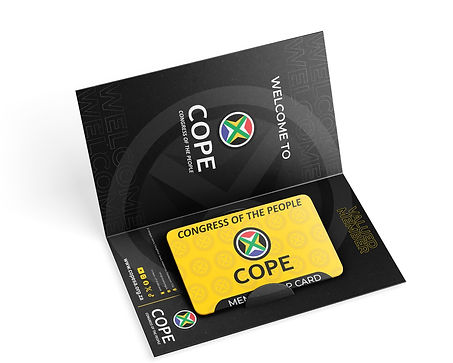
In 2008, following political divisions within the ANC, Lekota became a founding leader of the Congress of the People (COPE).
On 16 December 2008, he announced his candidacy for the party's leadership. As the only candidate nominated, he was elected unopposed and declared the first President of COPE at the party’s founding convention.
He served as President of COPE from 2008 until his passing in 2026.